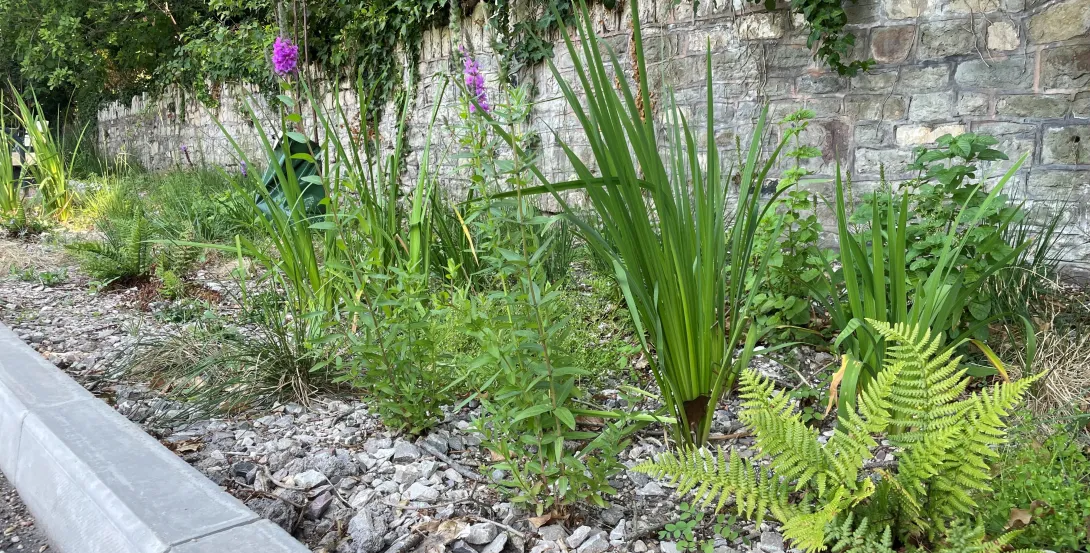
Visitors walking between Green Park and the Sainsbury's steps may have noticed a new area of planting surrounding the seating area. This is not just an attractive flower bed, it's a rain garden, designed to help manage rainwater naturally and sustainably.
Rain gardens are a type of Sustainable Urban Drainage System (SuDS). They capture rainwater running off surrounding hard surfaces, in this case the river towpath, and allow it to soak slowly into the ground. Water enters the garden through gaps in the kerb, helping to reduce surface water flooding and relieve pressure on drains and sewer systems during periods of heavy rainfall.
As our climate changes, Bath is expected to experience more intense rainfall events alongside longer dry periods. Rain gardens are designed to cope with both. The planting can cope with temporary waterlogging for up to 48 hours while also remaining resilient during drier conditions. By slowing the flow of rainwater and increasing natural infiltration, rain gardens play an important role in helping Bath adapt to a changing climate.
The garden has also been planted to benefit wildlife. A mixture of native and pollinator-friendly species provides nectar, pollen and habitat for bees, butterflies and other insects throughout the year. Native plants include:
- Devil's-bit Scabious (Succisa pratensis)
- Meadowsweet (Filipendula ulmaria)
- Ragged Robin (Lychnis flos-cuculi)
- Tufted Hair Grass (Deschampsia cespitosa)
This scheme is a pilot project, and we hope it will demonstrate how rain gardens can help manage rainwater, support biodiversity and create greener, more resilient spaces across Bath.
As with all new planting, the garden will take time to establish. Over the coming seasons it will become fuller, more colourful and even more valuable for both people and wildlife.